Next, it helps to know that fast outfit judgments are not just “being picky”, they are your brain trying to reduce uncertainty in a few seconds. When you meet someone new, you rarely get enough time to collect real evidence, so the brain relies on shortcuts to guess what to expect and how to act.
Psychologists often call this thin-slicing: forming a quick judgment from very small bits of information. Clothing is perfect for thin-slicing because it is visible at a distance, easy to compare to past experiences, and packed with patterns the brain already recognizes (uniforms, dress codes, “workwear,” “going-out” looks). The catch is that a shortcut can be helpful when it is right, and unfair when it is wrong.
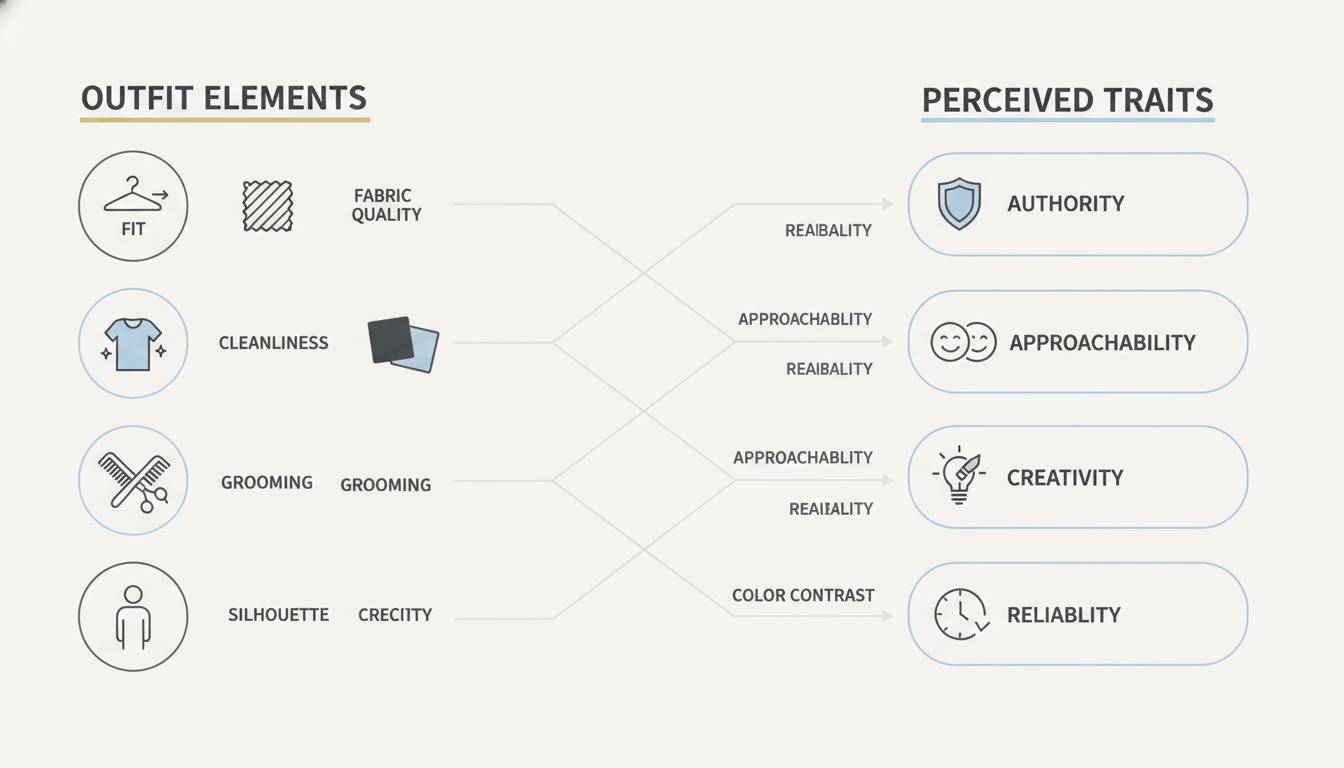
Also, two fast signals tend to show up almost immediately: competence and warmth. Competence is the quick guess of whether you seem capable, prepared, and “on top of things.” Warmth is the quick guess of whether you seem friendly, safe, and easy to approach. Most people read both at once, even in settings that claim to be “casual.”
In practice, clothing can nudge both signals in predictable ways:
Competence often rises with clear structure and intent, such as a pressed shirt, a blazer, clean shoes, a matched belt and bag, or a simple color palette (for example, 2 to 3 base colors)
Competence often drops when details look accidental, such as heavy wrinkling, scuffed shoes, obvious stains, or a fit problem like pulling at buttons
Warmth often rises with softer textures and approachable choices, such as knitwear, relaxed fits that still look tidy, warmer colors, or a small personal detail like a subtle accessory
Warmth can drop when the look reads as highly guarded or “don’t talk to me,” such as very dark head-to-toe, sharp angular silhouettes, or extreme formality in a low-stakes context
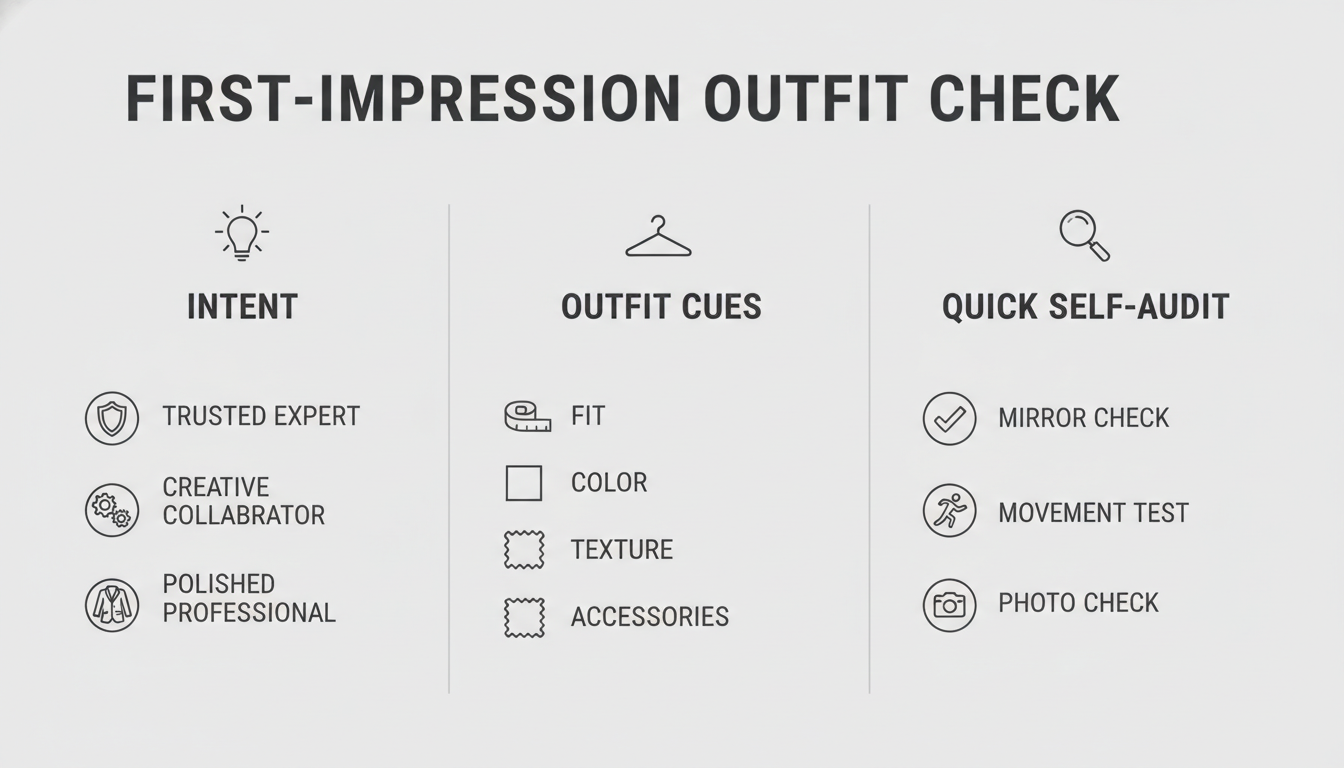
If you do one thing, decide which signal you want to lead with in the next 10 seconds. For example, a job interview for an analyst role may benefit from competence-first, while a first day managing a new team often works better with warmth-first so people feel comfortable bringing questions.
If you’re short on time, skip shopping and fix the highest-impact competence cues: remove wrinkles, choose clean shoes, and make sure one key piece fits well (usually the jacket, trousers, or the top closest to your face). A common mistake is trying to show both competence and warmth by adding more items, which can look busy. The fix is to keep the outfit simple and add one warmth cue, like a softer color near the face or a small personal accessory.