-------------------------------------
Jul 9 / Milan Fashion Campus

Why Expensive Clothes Don’t Automatically Make You Stylish

Learn why price doesn’t guarantee style. Master fit, proportion, and color harmony with easy tips to look stylish—start now.

Key Takeaways

  • Style comes from fit, proportion, and coherence, not price tags

  • A small, intentional wardrobe beats a closet of scattered “luxury” pieces

  • You can look more stylish by improving styling decisions before buying anything new

The moment you realize the pricey outfit still feels off

You finally buy the designer piece you have been thinking about for weeks. It fits, the fabric feels expensive, and you expect the reaction to match, but the compliments do not change and your mirror check still feels uncertain. Then you take a few photos and the result looks “fine,” yet it still does not look like you.

Here’s why: most outfits are decided by 3–5 visible choices people notice in seconds, and price usually affects only one of them (the label or material). If one expensive item goes into an outfit where the other visible choices are working against you, the final look will still read as off.

A quick way to diagnose it is to name what you wanted the outfit to say, then check the decisions that actually show up on camera:

  • Shape: overall silhouette and proportions (for example, wide trouser with a cropped top vs. long top)

  • Color: contrast and harmony (for example, two muted tones vs. one high-contrast pop)

  • Texture: matte vs. shine, stiff vs. drapey (for example, satin next to chunky knit)

  • Finish details: shoes, bag, belt, jewelry, hair (the items people read as the “final edit”)

  • Fit and placement: where hems, waistlines, and sleeves land

If you do one thing, do this: take two 30-second mirror photos, one straight-on and one angled, then circle the first two things your eye goes to. If it is not your face first, adjust a visible choice before you blame the price.

A common mistake is treating the designer item as the whole outfit, then leaving everything else on autopilot. The fix is to make one controlled change at a time (swap shoes, change the tuck, remove one accessory) so you can see which decision is actually causing the “not you” feeling.

Why price rarely fixes the real problem

Next, it helps to name what’s actually causing the “something’s off” feeling, because money tends to change the label, not the outcome. A $400 blazer can still look wrong if the shoulders don’t sit flat, the length cuts you at an awkward point, or the fabric fights everything else you’re wearing.

Most “expensive but not stylish” moments come from a few repeat traps:

  • Poor fit: sleeves too long, waist too tight, shoulders collapsing, pants pooling at the ankle

  • Wrong silhouette for your body: a boxy jacket on a frame that needs shape, or a skinny cut that highlights what you’d rather balance

  • Clashing undertones: warm camel next to cool grey, bright white against cream, gold hardware with silver jewelry

  • Inconsistent message: mixing formal and casual signals, like a sharp suit jacket with beat-up sneakers or a fancy dress with a slouchy tote

If you do one thing, fix fit first. In practice, even a basic t-shirt looks more considered when the shoulder seam lands at your shoulder, the sleeve hits mid-bicep, and the hem length works with your rise and proportions.

Here’s the mindset reset that keeps you from buying the same disappointment twice: separate craftsmanship value from styling impact. Craftsmanship is about how long it lasts and how it feels, like better stitching, lining, fabric weight, and hardware. Styling impact is about what people see at a glance: shape, color harmony, and whether the outfit is sending one clear signal.

Here’s the catch: price usually improves craftsmanship faster than it improves styling impact. Works best when you already know your best cuts and colors, because then the upgrade is obvious. Fails when you’re still guessing, because you’ll pay more for the same mismatch.

If you’re short on time, skip researching brands and do a 10-minute check before buying:

  • Can you name one outfit you already own that this goes with

  • Does it match the formality of that outfit (casual, business, event)

  • Are you choosing it for the logo, or for the shape it creates on you

  • Would a tailor take in the waist, shorten sleeves, or hem pants within a week

The style foundations that matter more than labels
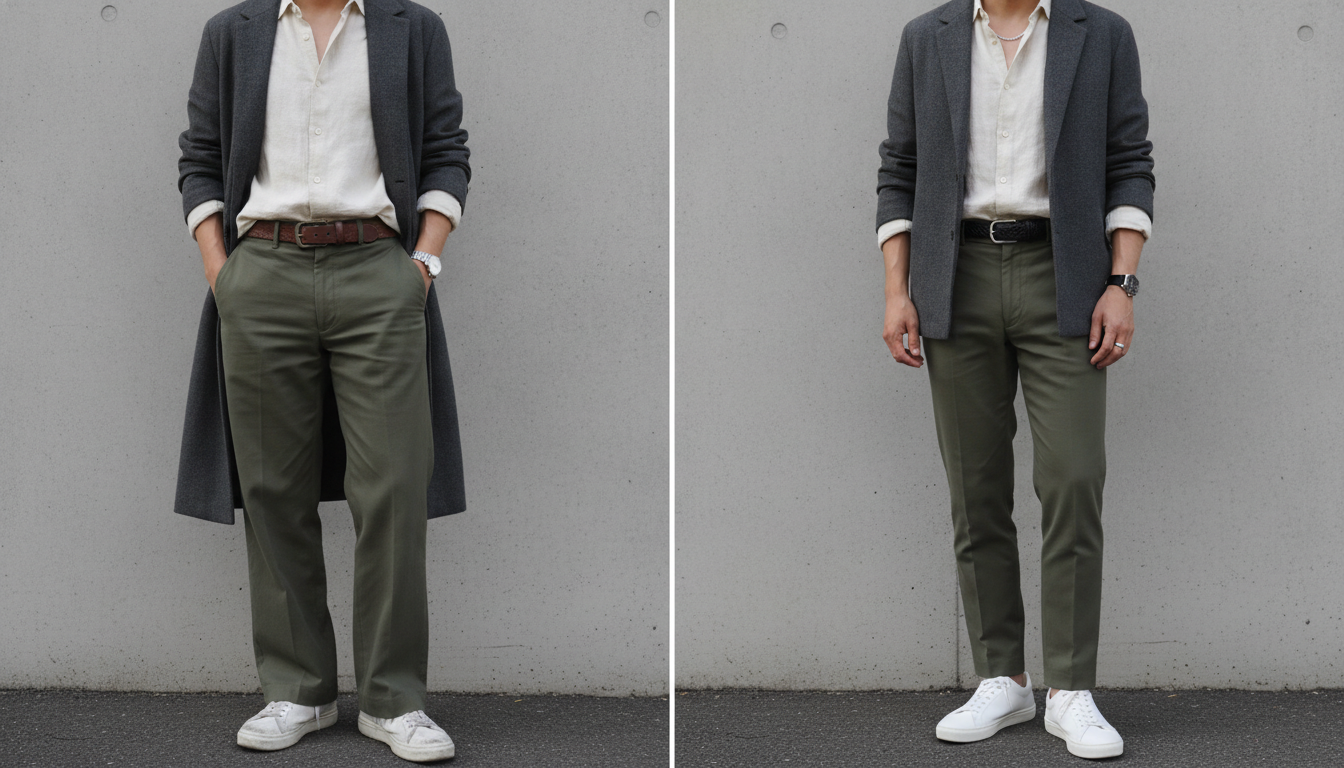
Next, instead of asking “Is this brand good?”, ask “Does this outfit read as intentional?” Most outfits look better when the foundation is right: the fit is clean, the proportions make sense for your body, and the colors relate to each other.

If you do one thing, start with fit and tailoring. A $20 pair of trousers that lands cleanly at the shoe and sits smoothly at the waist will usually beat a $400 pair that puddles at the hem or pulls at the button. Works best when the garment is close to your correct size (so a tailor can refine it); fails when you try to tailor something 2 sizes off or when the shoulders don’t fit in the first place.

Also, check proportion and balance before you buy anything new. If you’re wearing a boxy top, try a straighter pant or a slimmer skirt; if you’re wearing wide-leg pants, try a more fitted or cropped top so your shape doesn’t disappear. A fast 30-second mirror test is to look at your outfit in “blocks” (top, bottom, shoes) and make sure one block is not swallowing the others.

Here’s the catch: many people try to fix proportion with more “statement” pieces, and it backfires. A simpler fix is to choose one focal point and keep the rest quiet, like a strong coat with plain jeans and minimal shoes, or a bold shoe with a neutral outfit.

That said, color harmony and texture mixing are where outfits start to look expensive, even when they aren’t. You don’t need perfect matching, you need relation: warm with warm, cool with cool, or one intentional contrast. For texture, pair a smooth piece with a textured one (knit with denim, leather with cotton, satin with wool) so the outfit has depth without noise.

Intentional repetition is the glue. Repeat one element 2–3 times so the look feels planned, such as:

  • Repeat a color (black belt + black shoe + black bag)

  • Repeat a metal tone (silver earrings + silver watch)

  • Repeat a shape (rounded toe shoe + rounded bag silhouette)

  • Repeat a texture (denim jacket + denim jean, or knit beanie + knit sweater)

If you’re short on time, skip the extra accessories and do the quick self-check: does the outfit have one clear focal point and a consistent vibe (casual, sharp, sporty, romantic)? If the answer is no, remove one competing piece first, then adjust fit or proportion.

Upgrade your look without upgrading your budget

Next, focus on repeatable changes that make the same closet look sharper. A simple way to do that is a 10-minute outfit routine that you can run before work, a dinner out, or a video call.

A 10-minute outfit routine

  1. Choose a base: start with 2 simple pieces (jeans + tee, trousers + knit, dress + tights)

  2. Define a focal point: pick one area to lead (neckline, jacket, shoe, bag)

  3. Add structure: include one structured piece (blazer, denim jacket, belt, tucked shirt) to create a clear shape

  4. Edit accessories: keep 1 to 3 items that match your focal point, remove the rest

  5. Check footwear: wipe down sneakers, swap to cleaner shoes, or choose a pair that matches your palette

If you do one thing, do the structure step. Turning a top into a tuck, adding a belt, or layering a jacket often fixes the “something’s off” feeling in under 60 seconds.

Also, spend where it shows up most often, not where it screams the loudest. Tailoring, versatile shoes, and a cohesive palette tend to make repeating outfits look deliberate, while one loud “statement” buy can sit in your closet waiting for the perfect occasion.

Smart spending priorities (in order)

  • Tailoring: hem pants, take in a waist, or adjust sleeves, works best when the garment already fits in the shoulders and hips

  • Versatile shoes: one clean pair you can wear 3 to 5 days a week beats a trendy pair you wear once a month

  • A cohesive palette: choose 2 neutrals plus 1 accent color so pieces mix easily and outfits look planned

Here’s the catch: tailoring fails when the fabric is pulling too hard or the size is wildly off. If you’re short on time, skip big alterations and do the quick wins instead: a clean shoe, a belt or tuck for shape, and accessories that match one metal and one color family.

Closing remarks

Next, keep the goal simple: look clear and put-together, not expensive. As a reminder, "Style is clarity, not cost." When the choice is between another purchase and one clean fix, the fix almost always wins.

If you do one thing today, pick one item you already own that was “supposed” to feel special, a blazer, a dress, a pair of trousers, or premium sneakers, and adjust one detail that affects the whole outfit.

  • Get the fit right in one place (hem, sleeve length, waist) so the piece sits cleanly

  • Swap one competing item (busy top, flashy belt, loud shoes) for something quieter

  • Set one rule for proportions (wide pants, slim top; or fitted jacket, straight-leg jeans)

  • Use one finishing step (steam, lint roll, clean shoes, tuck)

What’s one expensive item you own that could look better with one fit or styling adjustment today?

FAQ

How can I tell if something looks expensive versus looks stylish

If you notice the logo, trend, or price first, it can read expensive. If you notice clean fit, balanced proportions, and tidy details first, it reads stylish. Check shoulder seams, hem lengths, fabric shine, and whether it wrinkles fast.

What’s the fastest way to look more put together with basics

Pick one clear silhouette and repeat it for a week. For example: straight jeans + fitted tee + structured layer. Then do a 60-second check: steam or lint roll, tuck or half-tuck, match shoe color to belt or bag.

When is it worth paying more for a clothing item

Pay more when cost-per-wear will be high and quality affects how it sits on the body. Usually this means shoes, outerwear, and a daily bag. Skip paying extra for fast-trend tops or anything that needs constant dry cleaning.