-------------------------------------

Why Instagram Still Builds Fashion Brands in 2026

Build a fashion brand on Instagram in 2026 with identity, content pillars, community and conversion. Learn what works now and apply it today.
May 20 / Milan Fashion Campus

Key Takeaways

  • In 2026, Instagram builds fashion brands through a consistent identity, platform-native formats (like Reels, carousels, and Stories), and trust built in the comments and DMs

  • A strong approach mixes a few clear content pillars, story-led posts, and a clear conversion path from attention to action

  • You can evaluate your profile in seconds by checking clarity, cohesion, and whether every post creates an obvious next step

Your feed looks good but nobody remembers your brand

A beautifully shot grid can still lead to flat sales. You post three times a week, stories look polished, and the colors match, but people scroll past and forget your name 30 seconds later.

A common pattern is decent reach with weak action: many fashion pages sit under 2% engagement and still see low click-through, even when the photos are strong. The issue is usually not aesthetics, it is memory: no clear identity cues, no repeated story, and no obvious next step.

So this section is about fixing the gap between looking good and being remembered. By the end, you will be able to map:

  • Your identity cues (what stays consistent in every post)

  • Your content pillars (3 to 5 repeatable themes)

  • Your community system (how you start and continue conversations)

  • Your conversion steps (how someone goes from viewer to buyer)

If you do one thing first, pick one brand cue and repeat it for 14 days, such as a signature styling angle, a tight color pair, or a consistent opening line in Reels. Here’s the catch: if you change your look every post, it can work for inspiration accounts, but it often fails for product pages that need recognition to earn clicks.

Build a brand identity people recognize fast
Also, if someone saw three of your posts with the logo cropped out, could they still tell it was you within 2 seconds. That is the real test of brand identity on Instagram, where most people scroll while distracted.

Start by defining your world in plain language. Write one sentence for each of these and keep them in a note you check weekly: audience (who you dress and why), point of view (what you believe about style), visual codes (your repeatable colors, shapes, lighting, and composition), tone of voice (how your captions sound), and your promise (what someone gets by following you). If you do one thing, do the promise sentence first, because it gives your posts a consistent reason to exist.

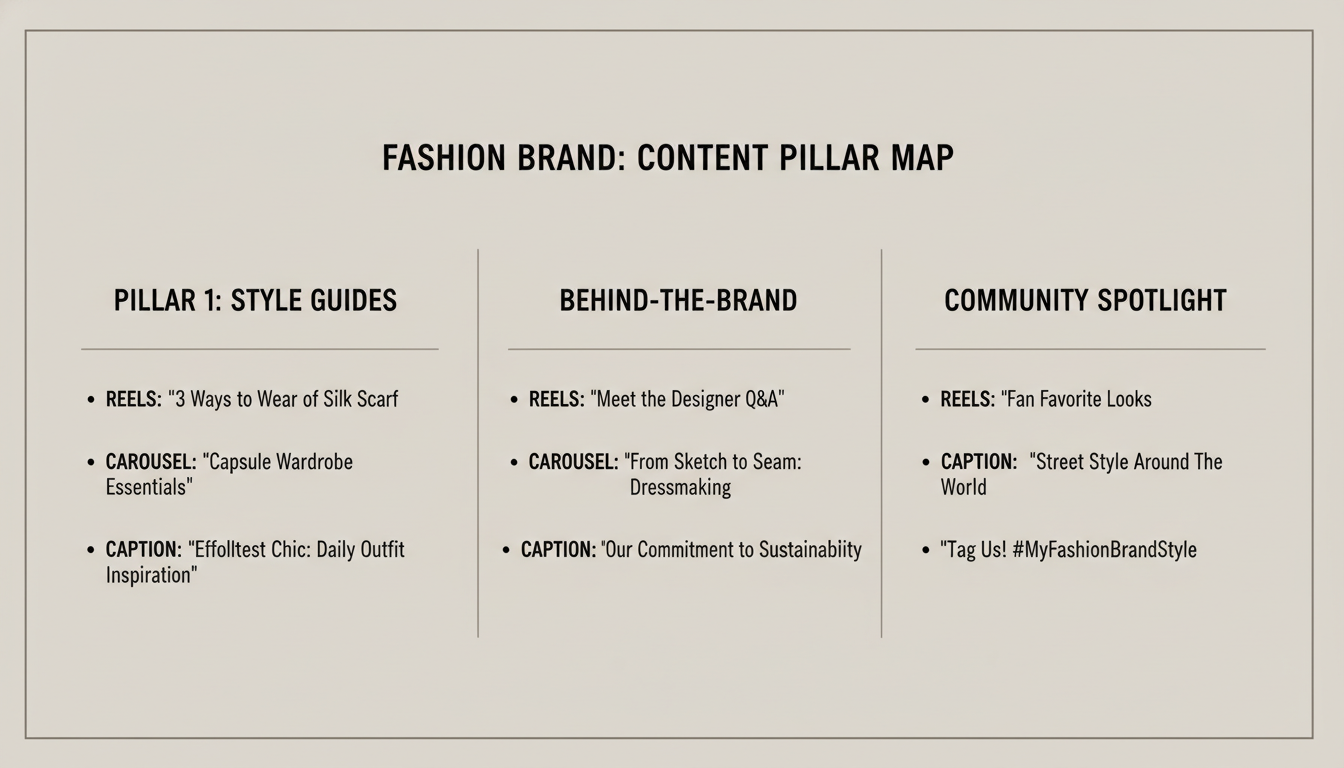
Next, translate that identity into 3 to 4 content pillars so your posts stop feeling random. Think of pillars as repeatable buckets you can rotate across a week, like a mini TV schedule.

A simple way to build pillars in 20 minutes is:

  • Pick 1 pillar that shows product desire (new drops, styling on-body, close-up material shots)

  • Pick 1 pillar that proves credibility (process, fit notes, sourcing, behind-the-scenes)

  • Pick 1 pillar that builds connection (founder POV, customer stories, cultural references)

  • Add a 4th only if it has a clear job (education, resale care, or community events)

Here’s the catch: pillars work best when each one has a clear visual code attached, and they fail when every pillar uses a different look. For example, you might shoot all desire posts with the same warm indoor light and framing, while credibility posts always use clean daylight and simple text overlays. If you’re short on time, keep the look consistent and vary the topic, not the other way around.

Create a 2026 content system that builds desire and trust
Next, you need a repeatable content mix that does two jobs at once: get discovered and then build confidence to buy. A simple benchmark to aim for is a weekly mix of discovery posts (short video) plus a few deeper posts that explain your point of view, so new people do not bounce after one scroll.

If you do one thing, do this: assign each format a clear role. Reels are for discovery (motion, styling, outfit changes, a clear hook in the first 2 seconds). Carousels are for understanding (fit notes, fabric close-ups, sizing, before-and-after styling). Captions are for meaning and persuasion (why you made it, how to wear it, what to do next).

Also, add proof and context so your brand feels real, not just styled. Behind-the-scenes can be as simple as a 15-second clip of pattern tweaks or a packing table shot before a drop. Styling is your creator-led commerce signal: show one item worn three ways by a founder, stylist, or store associate and call out specifics like heel height, rise, and layering.

Here’s the catch: content that looks perfect can still feel untrusted if it never closes the loop. Build a customer feedback loop by collecting questions from DMs, returns, and comments, then turning them into posts:

  • Reel: "What this skirt looks like walking" with day-to-night change in 10 seconds

  • Carousel: "Sizing on 3 body types" with measurements and which size each person chose

  • Caption: "Why we switched to a heavier lining" and what problem it fixed

Turn attention into community and conversion

So once your content gets reached and saves, the next job is guiding people to one clear next step.

If you do one thing, set one action per post and repeat it often enough that it feels familiar. Too many options (comment, click, DM, subscribe, shop) splits attention and makes people scroll.

Pick the next step that matches the intent of the post:

  • DM a keyword for sizing help, a lookbook PDF, or a restock alert

  • Join a waitlist for a limited drop or pre-order

  • Tap the shop link for one featured item (not your full catalog)

  • Book an appointment for fittings or styling

  • Drop a reminder for a live try-on or launch time

Tradeoff: DM keywords work best when people need help choosing or measuring, but they can fail when the offer is simple and the extra step feels like work. In that case, use a single shop link to one product or collection.

Next, make your account feel like a place where people get replies, not a billboard.

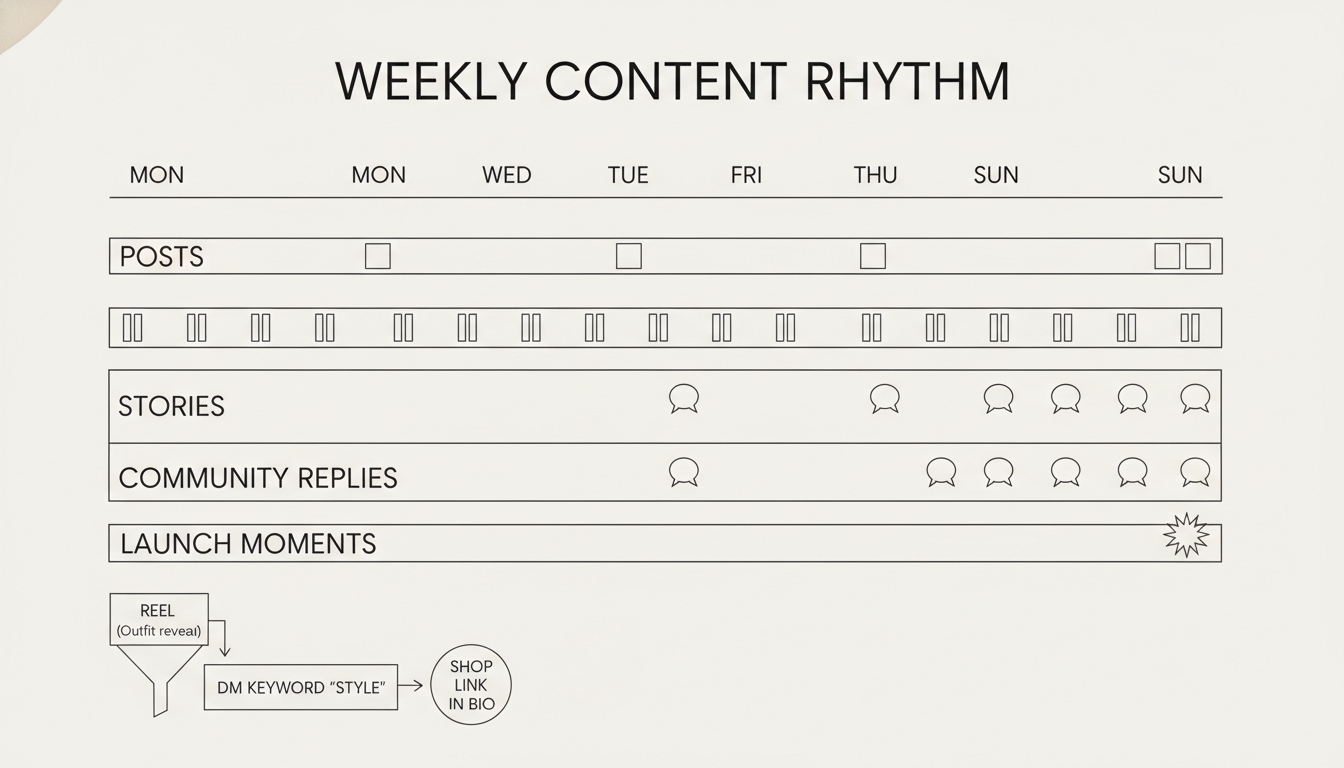
A simple weekly rhythm keeps you consistent without posting nonstop. For example, aim for 3 posts (or Reels) per week, daily Stories in 3 to 5 frames, and 15 minutes a day to reply to DMs and comments.

Try this weekly loop:

  • Mon: Reel that shows one outfit problem and the fix, end with one DM keyword

  • Wed: Carousel with details (fabric, fit, care), add a waitlist or shop link

  • Fri: Reel with social proof (UGC, try-on, before/after styling), add a reminder or appointment link

  • Daily Stories: behind-the-scenes, polls, Q&A, and reshares of customers

  • Community time: reply to every comment in the first hour, then batch DMs later

Common mistake: posting a launch once, then disappearing. Fix it by planning two lead-in posts, one launch post, and two follow-ups in the week of a drop, each with the same single next step.

Closing remarks

Next, remember this: the brands people remember are rarely the loudest. They are the clearest.

If someone landed on your profile for five seconds, what would they understand about you: who you design for, what you stand for, and what makes your product different. Then decide the one next step you want them to take, and make it obvious.

If you do one thing this week, do this:

  • Write one sentence that says who you serve and why your pieces matter

  • Check your last 9 posts and remove anything that fights that sentence

  • Pick one action for new visitors, like save this, join the list, or shop the drop

Here’s the catch: aesthetics can hide confusion. A beautiful grid works best when your message is already clear, but it fails when people cannot name you, describe you, or tell what to do next.

If you’re short on time, skip redesigning your whole feed. Update three things in 30 minutes: your bio first line, your pinned posts to match your offer, and one highlight that answers the top buyer question.

Learn these skills with Milan Fashion Campus

So if you want your Instagram to do more than collect likes, the fastest path is to build the skills behind repeatable results: clear positioning, consistent content, and simple conversion steps.

Social Media for Fashion focuses on the parts most creators skip once they hit a time crunch: tightening your profile so new visitors understand you in 5 seconds, planning content around product drops and seasonal moments, and turning followers into customers with clear next steps.

Next, if your main issue is that your brand still feels undefined, start with a brand foundation path.

  • Social Media for Fashion: profile building, growth, and converting followers into customers

  • Start & Launch Your Fashion Brand intensive: a faster, guided format if you want structure and deadlines

  • Branding for Fashion online course: a paced option if you need to fit learning around work, study, or production

Tradeoff to keep in mind: the intensive works best when you can block out hours each week, but the online course is a better fit when your schedule changes week to week.

FAQ

How do I start a fashion brand on Instagram with no audience?

Start by posting 9 to 12 pieces that show one clear style, one customer, and one promise. Then comment daily on 10 to 15 posts from your target customer and adjacent creators. Aim for 20 meaningful conversations per week, not followers

What should a new fashion brand post on Instagram?

Post a mix of product proof and taste. For example: 2 Reels showing fit on-body, 2 carousels that explain materials and sizing, 2 posts that show your process, and 1 customer-style post each week. Keep every post tied to one clear aesthetic

Is Instagram still good for fashion brands in 2026?

Yes, if you treat it as a discovery channel plus a relationship channel. It works best when you can show fit, texture, and styling in short video. It fails when you post only polished photos with no story, proof, or repeatable series

How often should a fashion brand post on Instagram?

A practical baseline is 3 to 5 posts per week plus daily Stories. If you are short on time, post 3 times weekly and reuse the same theme as a series for 4 weeks. Consistency matters more than occasional high-volume bursts

Can I sell fashion through Instagram without a website?

Yes. You can start with DMs, a simple order form, and payment links, then move to a site later. The tradeoff is more manual work: tracking sizes, shipping info, and returns. Use saved replies and a simple spreadsheet to stay organized

Do I need a big budget to start?

No. A phone, natural light, and one repeatable setup can carry your first month. Spend first on samples that fit well and one or two strong outfits to style multiple ways. Avoid paying for ads before you know which posts drive DMs or saves

Should I focus on reels or photos?

Use both, but prioritize Reels if you need reach and photos if you need clear brand taste. A simple split is 60% Reels, 40% carousels or photos. The common mistake is chasing trends that do not match your customer or your styling angle