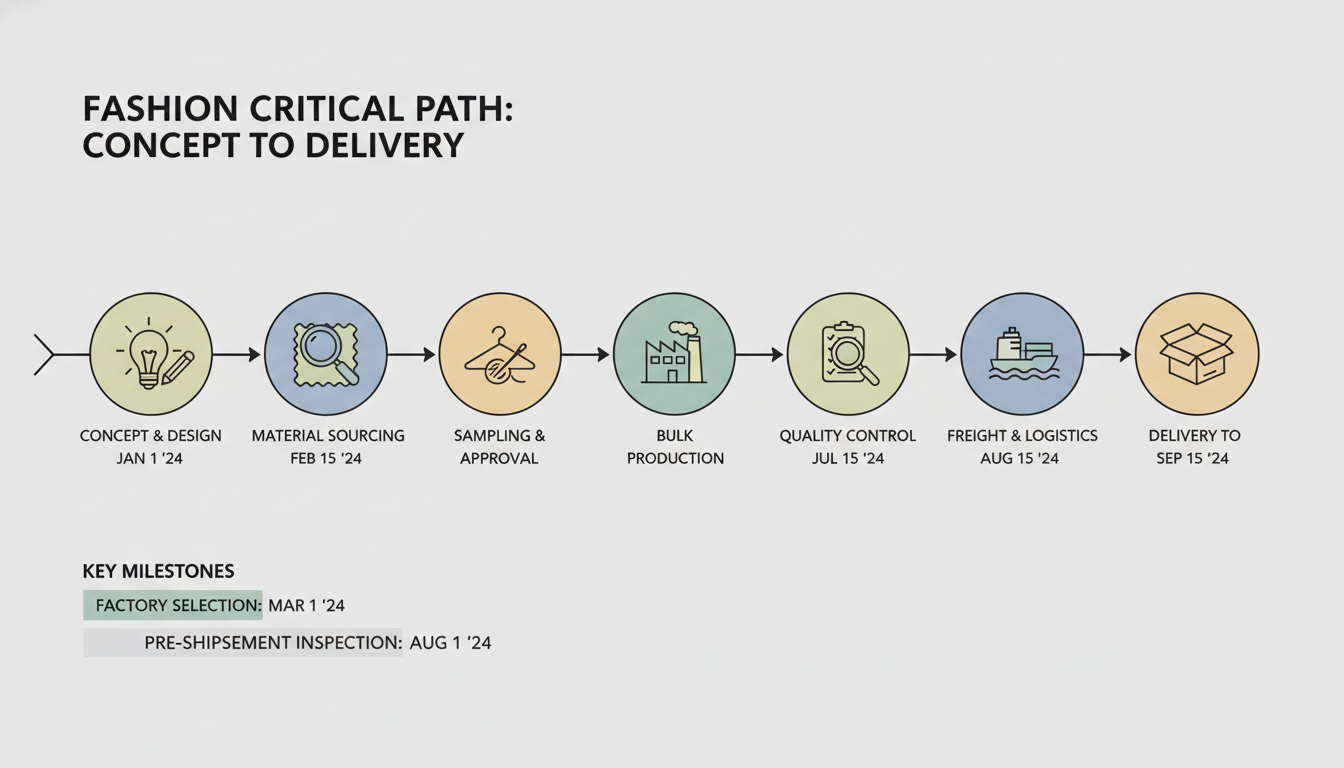
Next, zoom out from single costs and look at the full cash cycle, because that is where many small brands break.
A typical cycle looks like: you pay for sampling and fabric first, you often pay a factory deposit before production starts, you pay the balance before goods leave the factory, then you wait for delivery, then you wait again for customers or stockists to pay you. If that gap is 60 to 120 days, even a “profitable” drop can still leave you short on cash to restock or run marketing.
If you do one thing, map your cash cycle on a single page with dates, not guesses. Include what you pay, when you pay it, and what you collect, when you collect it, for one product and one launch.
Here’s why it breaks so often: the first plan is built on best case assumptions.
Common traps to watch for:
Under-costing: missing small line items like trims, labels, freight, duties, returns, payment processing, and rework, then realizing your “margin” was never real
Discount dependency: planning for full-price sales, but needing 15% to 30% off to move units, which can wipe out the cash you expected for the next run
Inventory deadstock: ordering 300 units to get a lower unit cost, then sitting on slow sizes and colors that lock cash for months
Choosing growth before profitability: adding new SKUs, new channels, or bigger runs before one product is repeatably profitable
Works best when you pick one launch, one hero product, and one sales channel to pressure test your numbers. Fails when you add variations too early, because every extra color and size multiplies cash tied up in stock.
In practice, fix the cycle before you chase sales volume.
Try this quick check:
For one SKU, write unit economics: selling price, product cost, packaging, shipping, and average discount
Estimate how many units you can sell in 30 days without discounts, then compare to your production minimum
Set a simple rule: do not place a production order unless the post-discount margin still covers marketing and overhead
If you are short on time, skip complex spreadsheets and just run this on one product and one drop
A common mistake is chasing a lower factory unit price by ordering bigger runs. A safer move is a smaller run with a clearer reorder plan, even if the unit cost is higher, because it keeps cash available for the next production cycle.