-------------------------------------
Jun 28 • Milan Fashion Campus

Face Shape Analysis: How to Choose Accessories and Necklines

Learn face shape analysis to choose flattering accessories, earrings, glasses, and necklines. Balance proportions with simple beginner rules.

Key Takeaways

  • Face shape analysis helps you choose accessories and necklines that create balance, not “fix” your face

  • The best results come from contrast, proportion, and comfort working together

  • Beginners can get fast wins by aligning earrings, glasses, and necklines with facial length and angles

When your outfit is almost right but your face area feels off
You know the feeling: the outfit is solid, the shoes work, the colors are fine, but something near your face looks slightly unbalanced in the mirror or on camera. Most of the time, the “off” feeling comes from what frames the face: earrings, glasses, hair volume, and the neckline.

A useful benchmark is speed. Once you know what to look for, you can usually spot the mismatch and make a quick fix in under 10 seconds by adjusting one item near the face, not the whole outfit.

If you do one thing first, check the two strongest frames at the same time:

  • Your neckline shape (V, crew, square, boat, collar)

  • Your closest accessory (earrings or glasses)

Common mistake: changing your top because the face area feels wrong. Fix: keep the top, and first swap either the earrings or the glasses, then reassess before changing anything else.

Here are a few realistic “almost right” scenarios and what they usually mean:

  • High crew neck + small tight studs can make the face area feel compressed, especially in photos

  • Strong angular glasses + sharp V-neck can read as too much pointiness at once, depending on your jawline

  • Oversized hoops + busy collar detail can compete, so your face stops being the focal point

Works best when you make one change at a time. Fails when you swap three things at once, because you cannot tell what actually fixed the balance.

By the end of this part, you’ll be able to spot your face-shape cues quickly and choose face-framing pieces on purpose:

  • Identify whether your cues read more curved, angular, long, or wide (without measuring)

  • Pick earrings that either echo your face lines or add contrast when needed

  • Choose glasses and necklines that keep attention on your eyes and expression

Identify your face shape fast without overthinking it

Also, you do not need a perfect label to make better styling picks. You just need a quick read on your proportions that you can repeat in 60 seconds before you shop or accessorize.

A simple rule: aim for “close enough,” not “exact.” If you’re between two shapes, treat it as a blend (for example, oval-round or heart-diamond) and test choices from both.

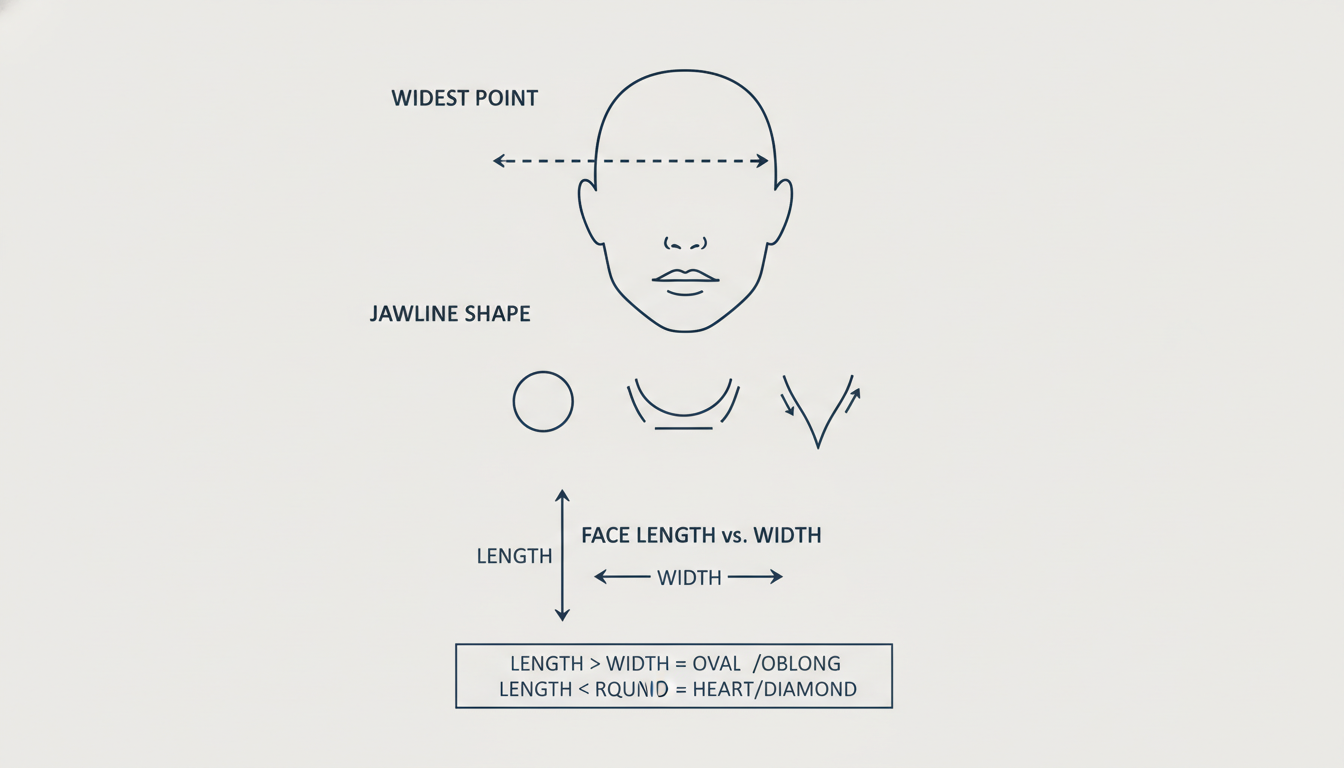
Check these three cues in a mirror or a front camera photo (hair pulled back, neutral expression):

  • Widest point: forehead/temples, cheekbones, or jaw

  • Jawline shape: rounded, angled, or pointed chin

  • Length vs width: does your face look clearly longer than it is wide, or close to equal

If you do one thing, do the widest-point check first. It usually explains why certain glasses widths or earring shapes feel “almost right” but not quite.

Use categories as guides, not rules:

  • Oval: length noticeably longer than width; jaw is softer than cheekbones

  • Round: width close to length; cheeks fuller; jaw rounded

  • Square: forehead, cheeks, and jaw similar widths; jaw more angular

  • Heart: forehead/temples widest; chin narrower or pointed

  • Diamond: cheekbones widest; forehead and jaw narrower

  • Long (oblong): clearly longer than wide; features read more vertical

Here’s the catch: common mistakes come from one photo angle. Fix it by checking one straight-on photo and one mirror look, then picking the shape that shows up in both.

Use contrast to choose earrings, glasses, and necklaces that balance proportions

Next, instead of matching your face shape perfectly, try using contrast to balance what you see in the mirror. Contrast just means choosing an accessory that adds what your face area needs: more height (verticality), softer edges, clearer structure, or more width.

If you only do one thing, decide the goal first. When you pick earrings, frames, or a necklace without a goal, you often add more of what is already strong, like extra width on a wide cheek area or extra angles on a sharp jaw.

Start with one goal: add height, soften, add structure, or widen

Here’s a quick way to pick the goal in 10 seconds:

  • Add verticality when your face area reads short or wide, or when a crew neck makes everything feel compact

  • Soften angles when your jawline or cheekbones look sharp and your outfit already has crisp lines like a blazer lapel

  • Add structure when your face reads soft and you want a sharper, more polished impression for a meeting or photos

  • Widen the frame when your face reads long or narrow and you want a steadier, more balanced look

Here’s the catch: the same item can help or hurt depending on scale. Small hoops may “soften” without adding width, while very large hoops can make the side-to-side line feel heavier.

Quick checks for earrings, glasses, and necklaces
Use these fast checks before you leave the house.

Earrings: where do they stop

  • If you want verticality, choose drops that end below the jawline (think 3–6 cm on most people)

  • If you want to widen, choose shapes that sit at cheek level (medium hoops or clustered studs)

  • If you want to soften, choose rounded shapes and lighter movement (small hoops, teardrops)

  • Common mistake: long heavy earrings that end right at the widest part of your jaw, which can pull attention to width

Glasses: what do the top line and corners emphasize

  • If you want structure, choose sharper corners or a clearer brow line (rectangular, subtle cat-eye)

  • If you want to soften, pick rounded or oval frames with a thinner rim

  • If you want to widen, look for a frame that is slightly wider than the widest part of your face

  • If you’re short on time: check the outer corners. If they point up, the look reads sharper; if they’re rounded, it reads softer

Necklaces: does it guide attention up or down

  • If you want verticality, go for a longer pendant that drops to mid-chest and creates a clean down line

  • If you want to widen, try a shorter length that sits near the collarbone and spreads the focus sideways

  • If you want to soften, pick curved links or a rounded pendant instead of a sharp V shape

  • Before/after check: swap a short chain for a longer pendant and see if your face area looks less compact in photos

In practice, treat these as tiny dials you can turn. One intentional change, like raising the glasses structure or changing where earrings end, often fixes the “something’s off” feeling without changing the outfit.

Pick necklines and face-framing details that complete the message

Next, treat your neckline as the first “frame” around your face. If your outfit feels close but your face area looks heavy, short, or overly sharp, the neckline is often the missing piece.

Start by matching the neckline effect to your goal. Think in simple outcomes: elongate, widen, soften, or sharpen the upper-body frame.

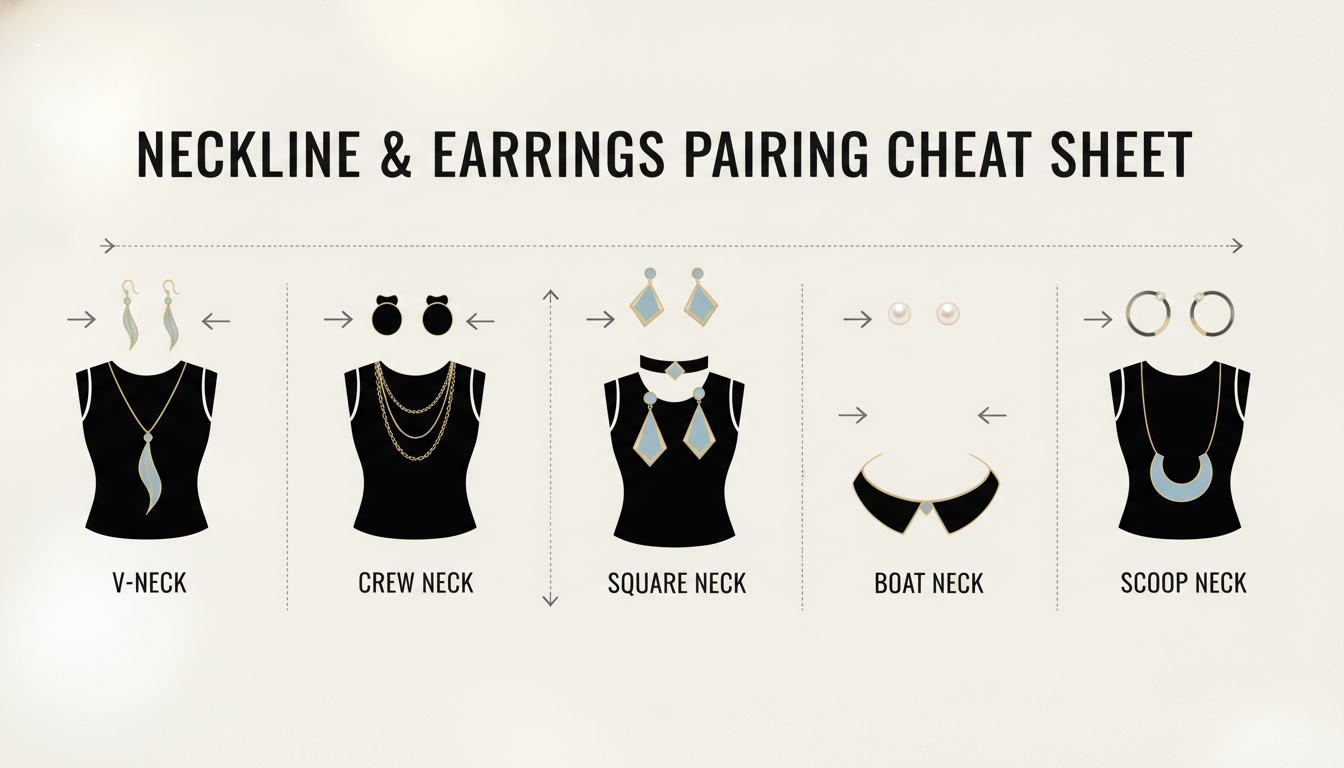
Use this quick neckline guide:

  • V-neck: elongates the neck and pulls the eye downward, helpful if your face reads round or your neck looks shorter in photos

  • Crew neck: shortens and widens the upper frame, helpful when you want a grounded, sporty feel or need more width at the shoulders

  • Square neck: adds structure and angles, helpful if you want a sharper, more tailored message

  • Boat neck: widens the shoulder line, helpful if you want more horizontal balance or a stronger upper frame

  • Scoop neck: softens the chest-to-neck area, helpful when you want a gentler, more open look

Also, combine details so the shapes do not compete. Neckline + earrings + hairstyle should read like one clean frame, not three different ideas.

A simple pairing rule you can apply in 30 seconds:

  • If the neckline is angular (V, square), choose simpler earrings (small hoops, studs, slim drops) and a cleaner hairstyle (sleek ponytail, tucked-behind-ears)

  • If the neckline is rounded (crew, scoop), choose a bit more angle near the face (teardrop drops, small geometric shapes) or add structure with a parted, smoothed style

  • If the neckline is wide (boat), avoid very wide statement earrings that extend past the jaw, try vertical drops to keep the face area from looking stretched sideways

Here's the catch: the most common mismatch is stacking “big” in the same place. A high crew neck + large chandelier earrings + hair fully up can crowd the face area, especially on camera.

Fix it by changing just one variable:

  • Keep the crew neck, switch to smaller earrings

  • Keep the statement earrings, switch to a lower neckline (scoop or V)

  • Keep both, wear hair down with one side tucked to create a longer line

Closing remarks

A detail near the face can change the whole message. If the outfit feels close but not quite right, start there before you swap the entire look.

So pick one change to test next time and keep everything else the same for a clean comparison:

  • Earrings length (shorter vs longer)

  • Glasses shape (rounder vs sharper)

  • A neckline swap (higher vs lower) to rebalance your frame

FAQ

What is face shape analysis?

Face shape analysis is a quick check of your main face proportions, like forehead, cheekbones, jaw, and face length. Stylists use it to choose earrings, glasses, collars, and necklines that add balance and match the look you want.

How do I know my face shape?

Pull hair back, look straight into a mirror, and take a front-facing photo. Compare forehead, cheekbones, and jaw width, plus overall length. If you are short on time, start with whether your face is longer than it is wide.

Which earrings suit a round face?

Longer, more angular earrings usually work best to add length, like drops, slim hoops, or geometric shapes. Very wide huggies can make the face look rounder. If you do one thing, keep the earring shape longer than it is wide.

What neckline is best for a square face?

Open, curved necklines often soften a strong jaw, like scoop, V-neck, or wrap styles. Very sharp straight necklines can repeat the jaw angle. Try a medium-depth V (not too deep) if you want a clear, lengthening effect.

Is accessories styling important for personal stylists?

Yes, because accessories sit near the face and change what people notice first. They can fix an outfit that feels slightly off without changing the clothing. A common mistake is choosing pieces that match trends but fight the client’s proportions.

Explore Milan Fashion Campus styling courses for hands-on practice

Next, if you want faster feedback than self-testing in the mirror, hands-on training can help you spot what’s “off” around the face area in minutes, not weeks. Short, intensive courses with one-to-one follow-up let you practice face shape analysis, accessories styling, and outfit balance with a trainer who can correct small details like earring scale, frame width, and neckline depth.

If you do one thing, pick the path that matches your real use case. For example, if you’re building a personal wardrobe for work meetings and weekends, start with women’s personal styling; if you’re styling clients across genders, choose a combo route; if you mostly dress men for business or events, focus on men’s image styling; and if you want to build looks for shoots and published content, go editorial.

Here are suggested paths to consider:

  • Personal Women Fashion Styling: for building repeatable outfits, accessory sets, and neckline choices that flatter your face shape

  • Combo Women & Men Fashion Styling: for broader client work and faster comparison between different proportion needs

  • Men Image Fashion Styling: for practical face-area fixes with glasses, collars, ties, scarves, and grooming-adjacent choices

  • Media Editorial Fashion Styling: for story-driven looks, strong contrast control, and face framing that reads well on camera

Here’s the catch: a course works best when you can practice on real outfits you already wear, not only “perfect” inspiration looks. If you’re short on time, bring 5 to 8 go-to items (two tops with different necklines, two jackets, a pair of glasses or sunglasses, and 2 to 3 accessories) so you can get clear before/after comparisons during the session.