-------------------------------------
May 21 / Milan Fashion Campus

Fashion Styling Course With Certificate: What Really Matters

Key Takeaways

A certificate is most valuable when it proves you did the work, not just that you showed up. Look for courses where the certificate is earned through assignments, instructor feedback, and a final evaluation you must pass.

Also, compare courses by what you will practice and produce, not by how the certificate looks on a website. If you do one thing, check the list of projects you will complete and how many times you will get feedback before you submit a final piece.

That said, the best option is the one that fits your level and helps you make portfolio-ready styling decisions. For example, a beginner should expect guided exercises and clear rubrics, while someone with set experience should look for tougher briefs, tighter deadlines, and more detailed critique.

Personalized Feedback for Every Student

Develop a professional eye for fashion styling through practical exercises, body shape analysis, color coordination, and outfit creation. Receive individual feedback designed to help you refine your taste, improve your styling decisions, and build real-world fashion styling skills from wherever you are. Start anytime and earn your certificate from Milan Fashion Campus
Write your awesome label here.

You want a certificate, but you really need skills you can show

You’re ready to study from home, but you keep thinking: what if I finish the course, get the certificate, and still freeze when someone asks me to style a look for a real person. A certificate can help you get noticed, but it will not carry a shoot, a fitting, or a client request on its own. What you actually need is proof of skill you can show in photos, in a portfolio, and in the way you explain your choices.

A practical benchmark: plan for 4–8 weeks to build your foundations (silhouette, color, proportion, styling logic), then expect ongoing practice to make it feel natural. Many courses give 6–12 months of access for exactly this reason, so you can repeat exercises, redo a brief, and improve your outcomes over time. If you do one thing, pick a course that gives you enough time to practice and iterate, not just to watch lessons.

By the end of this section, you’ll have two things: a checklist to evaluate whether a course will produce real styling outputs, and a simple plan to choose the right level and learning format for your schedule. If you’re short on time, skip comparing every syllabus line by line and focus on one constraint first: does the course require you to produce work weekly, and do you get feedback you can apply before the next assignment.

Common mistake: choosing a course mainly because the certificate looks official, then discovering the tasks are too light to build confidence. Fix it by looking for visible outputs you can point to, such as 3–5 styled looks on a model or mannequin, a mini lookbook, a moodboard-to-outfit process, or a before/after styling upgrade for a client type like a corporate professional, a bridal customer, or a content creator

Step 1: Verify the certificate is tied to real work, not passive watching
Next, treat the certificate like proof of performance, not proof you pressed play. If the course only requires watching videos, you can finish with a badge but still freeze when you need to style a real look for a client, a brand shoot, or a portfolio review.

Look for clear, graded work built into the course, such as:

  • Required assignments you must submit (not optional “practice”)

  • Completion rules (for example, submit 6 out of 8 assignments, or complete all modules in order)

  • A final exam, final project, or portfolio-style assessment that pulls the skills together

  • Rubrics or grading criteria that explain what “good” looks like

Also, confirm what feedback looks like before you enroll, because feedback is where skill gets built. A certificate means more when “pass” is based on outcomes you can explain, instead of a timer that tracks video minutes.

Check these details and ask for them if they are not stated:

  • Who reviews your work (instructor, teaching assistant, peer group)

  • How fast feedback arrives (for example, within a few days versus weeks)

  • What happens if you miss the mark (one resubmission, multiple attempts, or no redo)

  • Exactly how “pass” is determined (minimum score, required submissions, or a final project standard)

If you do one thing, do this: find one sample assignment description and confirm you will get written feedback on it.

Step 2: Use a skills checklist to confirm what the course will actually teach

Next, switch from course marketing to course outcomes. A certificate title can sound impressive, but if the modules do not teach specific styling skills, you will struggle to explain what you can do in an interview or to a first client.

A practical benchmark: by the end of the first 2 weeks (or the first 20 to 30 percent of the course), you should be producing small, checkable outputs, like a body-shape assessment for one person, a 10-look color palette, or a written style identity summary.

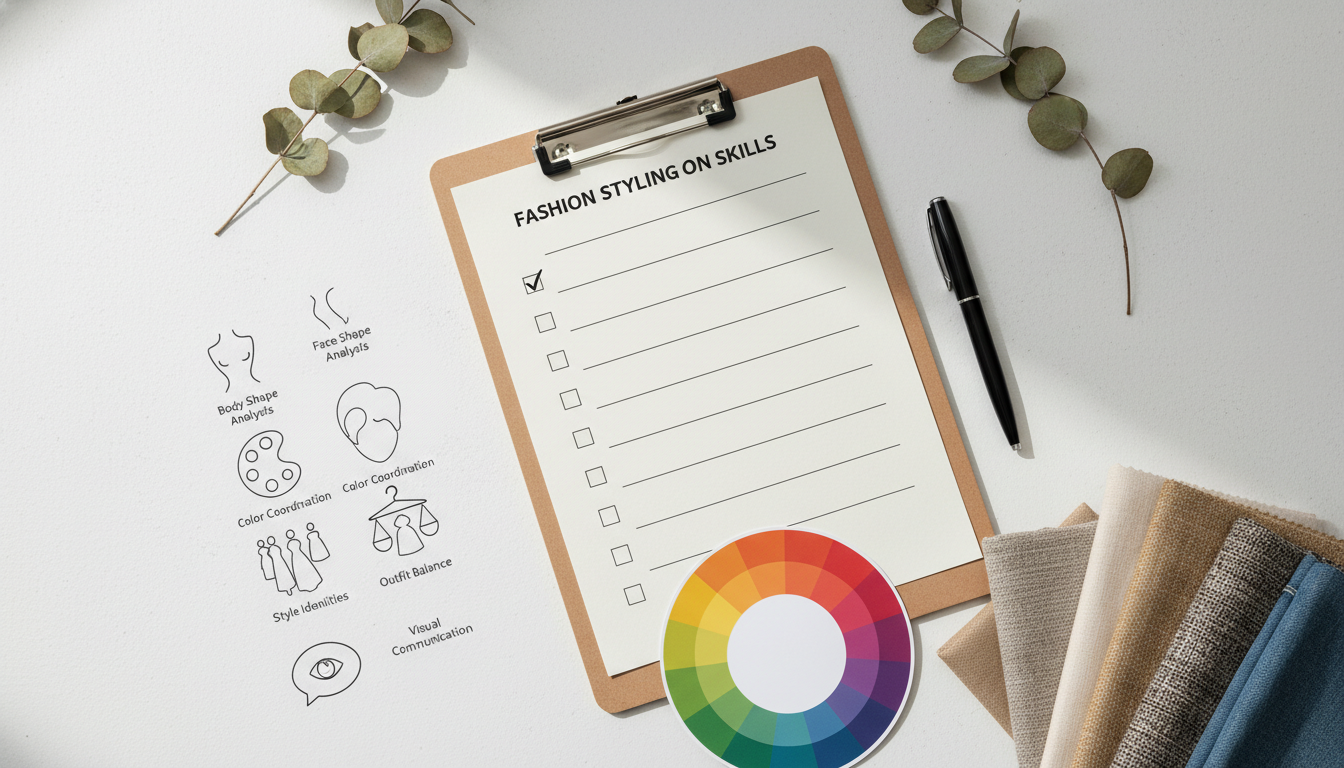
Use a simple checklist as you review the syllabus, lesson titles, and assignments. Look for direct, teachable skills such as:

  • Body and face shape analysis with clear guidelines you can apply to a real person

  • Color coordination beyond basics (undertone, contrast, and palette building)

  • Outfit balance (proportion, silhouette, focal points) you can explain in one sentence

  • Style identities (how to define and name a style direction, not just collect inspiration)

  • Visual communication (how to present looks to a client, a brand team, or a photographer)

If you do one thing, prioritize courses that ask you to show your work. Trend inspiration works best when you already have a base skill set, but it fails when it is the main content and you are left with moodboards only.

Also, check whether the modules build presentation skills and a portfolio mindset, not just taste. For example, a solid course will have you write a short look rationale, create a one-page styling brief, and format a before and after styling story for a portfolio.

A common mistake is choosing a course with many topics but no evaluation. The fix is to look for graded assignments, feedback cycles, or clear rubrics so you can measure progress and leave with proof, not just notes.

Step 3: Compare online options by structure, feedback, and fit for your level

Next, treat online courses like you would a shoot plan: you are not shopping for “flexibility”, you are buying a clear sequence that gets you from point A to a finished styling output.

A simple way to compare options is to score each course on three things: structure (how it’s taught), feedback (how you improve), and fit (whether the level matches where you are right now).

Match the course to your stage

If you are a beginner, you usually need clear steps, short assignments, and guided practice you can repeat. If you are more advanced, you need fewer basics and more time spent making decisions under constraints, like building a concept that works with a real budget, model, and deadline.

If you do one thing, do this: pick the course whose assignment outputs match what you want in your portfolio in 4 to 8 weeks. For example, a beginner might want one completed outfit story with notes on silhouette and color, while an advanced learner might want two tighter projects, like an editorial board plus a styled lookbook with a clear rationale.

Compare structure: flexible is not the same as guided

A course can be “self paced” and still be structured, but many are just a playlist. Structure is what tells you what to do this week, what to submit, and what “done” looks like.

Use this quick check when you compare course pages:

  • Is there a weekly sequence (even if you can move faster)

  • Are there deadlines or suggested pacing, like 2 to 4 hours per week

  • Do assignments build on each other, like moodboard → pulls → styled looks → write up

  • Are there examples of finished student work, not just instructor samples

Avoid common mistakes that waste time

That said, three mistakes show up again and again when people choose certificate courses online.

  • Choosing flexibility without structure: works best when you already know what to practice, fails when you are still learning what “good” looks like

  • Chasing the document: a certificate is useful, but it will not fix weak work, so judge the course by outputs you can show

  • Ignoring feedback loops: without critique (from an instructor, peers, or required revisions), people repeat the same styling choices for weeks

If you’re short on time, skip long course descriptions and look for two items first: a sample assignment brief and the feedback process. Those two tell you faster than anything else whether the course will move your work forward.

Closing remarks

So before you click enroll, remember this: “A certificate can open the door. Your skills are what make people remember you.” A credential helps you get considered, but your work is what gets you chosen when someone compares two stylists side by side.

If you do one thing next, pick the course that produces portfolio pieces you would confidently send to a brand, editor, or client after 4 to 8 weeks of steady practice. What will you choose as your next step: a course that looks impressive, or one that produces work you’d proudly show?

Explore Milan Fashion Campus online styling courses and certification

FAQ

Is a fashion styling course with certificate worth it?

It is worth it when the certificate reflects assessed work you can show, like styled looks, moodboards, and shoots. If it is only based on watching videos, it rarely changes your job options. Prioritize feedback and portfolio outputs.

Can beginners join a fashion styling course with certificate?

Yes. A good beginner course starts with fundamentals like silhouette, color, fabric, and styling tools, then builds to full looks. Check for clear weekly tasks and instructor feedback, so you know what “good” looks like as you learn.

Do employers care more about certificate or portfolio?

Most care more about your portfolio because it shows taste, range, and how you solve briefs. A certificate helps as proof of training, especially early on. If you do one thing, make sure you can present 6 to 10 strong projects.

Can I take a fashion styling course with certificate online?

Yes, if the course includes structured assignments and critiques, not just recorded lessons. Look for deadlines, brief-based projects, and a clear submission process. If you are short on time, choose a course with weekly deliverables you can finish.

How long does it take to complete a fashion styling course with certificate?

It depends on course depth and your weekly hours. Short courses may take a few weeks, while portfolio-focused paths often take a few months. A common mistake is rushing projects. Build in extra time for revisions after feedback.