-------------------------------------
Jun 28 / Milan Fashion Campus

How to Create Outfits for Different Lifestyles With Outfit Planning and Lifestyle Styling

Key Takeaways

  • Outfit planning works best when it starts from your real routines, environments, and comfort needs rather than trends

  • Lifestyle styling turns personal style into repeatable outfit systems for work, weekends, travel, and events

  • Simple outfit formulas help beginners build practical looks quickly and consistently

When a beautiful outfit fails in real life
Picture this: your moodboard outfit looks perfect in the mirror at 7:30 a.m., but by 10 a.m. it is already failing. The shoes hurt on the walk from the train, the fabric shows every crease from sitting, and the “one bold piece” feels too loud once you step into a strict office or client meeting.

Here’s why this keeps happening: outfits are often planned for a photo, not a full day. Commute time, indoor versus outdoor temperature swings, and dress codes turn “beautiful” into “unwearable” fast, especially when you need the look to last 8 to 10 hours.

Also, most people repeat a small set of outfits each week, even if their closet is full. In practice, that means smarter planning beats more options: if you can build 3 to 5 usable outfit groups for your real routine, you stop relying on last-minute fixes.

By the end of this post, you’ll be able to map a lifestyle to outfit needs and build outfit groups that hold up in real life, not just in a mirror selfie. Think in terms of where the look must work: commute-friendly layers, sit-and-stand comfort, and one “swap” piece (like shoes or a jacket) that shifts the outfit from casual to compliant.

Common outfit failure points you can check in under 2 minutes:

  • Shoes that cannot handle your real walking distance

  • Fabrics that crease, cling, or overheat by midday

  • Necklines, hems, or fits that conflict with the strictest place you go that day

  • A bag that looks good but cannot carry what you actually bring (laptop, lunch, gym kit)

  • No temperature plan (one layer too many, or none at all)

Start with lifestyle styling so the outfits fit the person
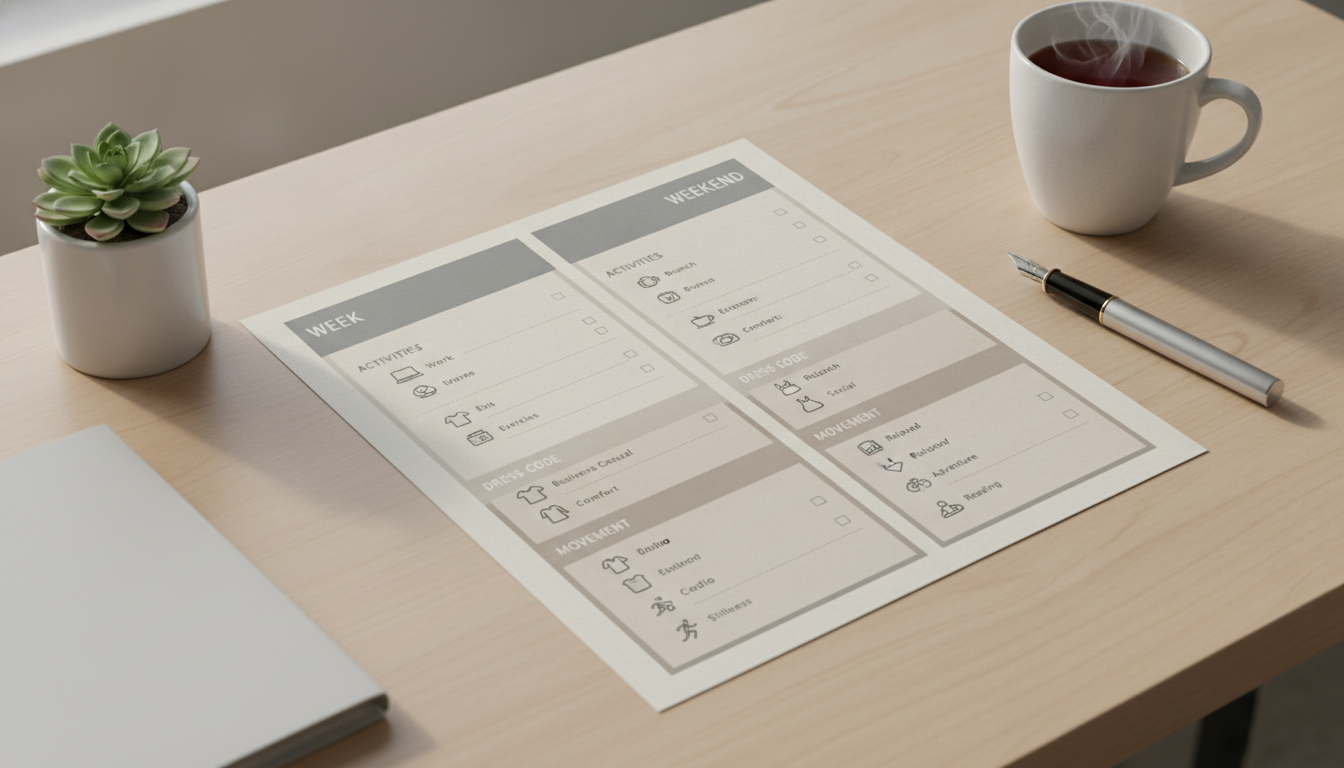
A good outfit plan starts before color palettes or trend boards. Lifestyle styling means dressing for the person’s real life: their work setting, how much they move, the climate they live in, cultural norms, budget limits, and how long they actually have to get ready.

If you do one thing first, do this: write the “rules of the week” in plain words. For example: “3 office days with lots of sitting, 2 days on-site with stairs, 1 dinner out, weekend errands mostly on foot, 10 minutes to get ready on weekdays.”

Next, gather inputs fast with a simple one-page check.

  • Routine map: list week vs weekend, plus any dress codes (office, client-facing, gym, classes)

  • Mobility needs: walking distance, commuting, stairs, lifting, sitting discomfort points

  • Climate reality: hottest/coldest month, rain or wind, indoor AC, seasonal layering needs

  • Culture and context: modesty needs, family events, workplace norms, neighborhood vibe

  • Budget and shopping rhythm: “one item per month” vs “seasonal refresh,” plus price ceiling per category

  • Getting-ready time: 5, 10, or 20 minutes, and whether hair/makeup is part of that

  • Comfort triggers: fabrics that itch, waistbands that pinch, sleeve lengths that bother you

  • Shoe reality: heel height you truly wear, walking tolerance (for example, 20 minutes), and any foot issues

  • “Never again” items: pieces you regretted (too sheer, too tight when sitting, fussy dry-clean-only, slips off shoulders)

Here’s the catch: lifestyle styling works best when you’re honest about what you repeat weekly, and it fails when you plan for an ideal week that happens once a month. If you’re short on time, skip mood boards and just complete the routine map plus shoe reality first, then build outfits around that.

Use a beginner outfit planning system that creates repeatable looks

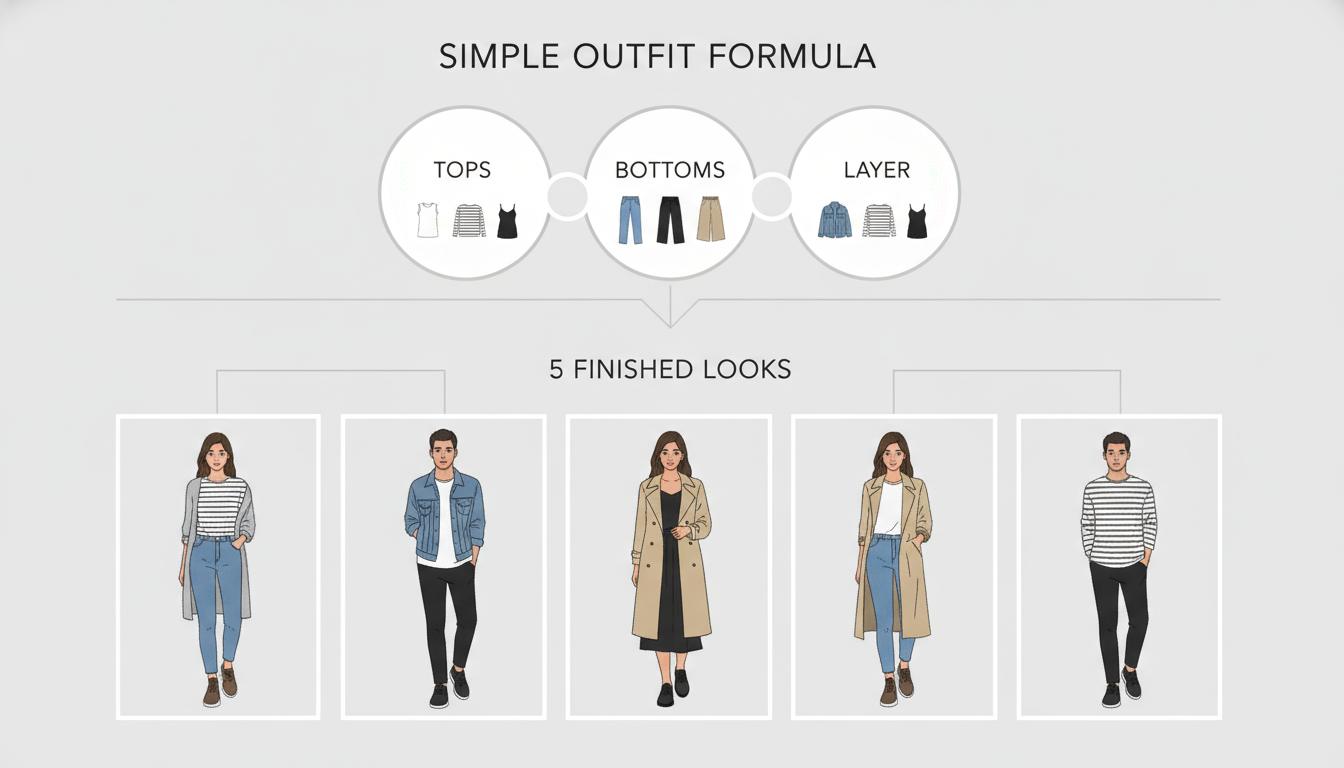
Next, you need a plan you can repeat on a rushed morning, not a one time “perfect outfit.” A simple formula keeps decisions small: top + bottom + layer + shoes + accessory, then you change just one piece at a time so the look still feels like you.

If you do one thing, do this: write 3 base outfits using the same shoes and bag, then swap only the top. This works best when your colors already mix (for example, black, white, denim, navy, and one accent color), and it fails when every item needs a special bra, special hem length, or special shoe height.

In practice, build outfit groups so you are not starting from zero for each part of your week:

  • Everyday: 5 minute looks for errands and casual plans (example: tee + straight jeans + overshirt + sneakers + small hoops)

  • Work: 10 minute looks that read polished on camera or in person (example: knit top + trousers + blazer + loafers + watch)

  • Social: 10 to 15 minute looks with one statement piece (example: simple dress + denim jacket + ankle boots + clutch)

  • Travel: repeatable outfits that layer and rewear (example: tank + wide leg pants + cardigan + trainers + crossbody)

  • Emergency easy looks: the “I have no time” option (example: matching set + clean sneakers + simple necklace)

Common mistake: building groups with items you rarely wear. Fix it by pulling from what you wore in the last 14 days, then upgrading one element, like swapping the layer from hoodie to trench or the shoes from running sneakers to leather sneakers

Solve for the most common lifestyle categories without forcing one aesthetic

Next, take the outfits you planned and pressure-test them against real calendar categories, not a single “look.” Two people can both need a work-from-home wardrobe, but one prefers tailored neutrals and the other prefers color and prints, so start with needs first and let taste sit on top.

A simple benchmark: if you cannot name at least 8 situations you dress for in an average month, you will default to building “nice outfits” that do not show up when you need them.

Map needs to outfit solutions by category, then repeat the same structure with different colors, fabrics, or silhouettes so it still feels like you.

  • Office (in-person): 2–3 work tops + 2 bottoms + 1 layer + 2 shoe options that can handle a full day on your feet

  • Creative work: 1 statement piece + simple base (tee or knit) + clean shoe so you look intentional without feeling costume-like

  • Work-from-home: “camera-ready” top + comfortable bottom + one warm layer for temperature swings between morning and afternoon

  • Travel: one outfit you can sit in for 4–8 hours + a layer that works as a blanket + shoes you can walk 10,000 steps in

  • Evening: one dressy core (dress or top) + one alternative shoe + one bag, planned to work with at least 2 outerwear options

  • Campus: a repeatable uniform (jeans or trousers + knit or tee + sneaker) plus one “presentation day” layer

  • Parent-friendly: washable fabrics + pockets + shoes you can run in, with a “look pulled together” third piece like a cardigan or overshirt

  • Weekend casual: 2 go-to bottoms + 3 tops + one jacket, all mix-and-match so getting dressed takes 5 minutes

Here’s the catch: most outfit plans fail because they ignore the parts that make life messy. If you do one thing, plan shoes first for each category, because the wrong shoe breaks the whole system.

Common mistakes and quick fixes:

  • Ignoring shoes and movement → choose shoes based on walking time and surfaces (stairs, cobblestones, commuting)

  • Forgetting climate → build a warm and a hot-weather version of the same outfit formula (swap fabric, sleeve length, layer)

  • Styling “your taste” instead of the need → start with the category requirement, then adjust color, print, and shape to match your style

  • Planning single outfits, not systems → build 3 outfit formulas per category and repeat them with small swaps

Closing remarks

So the goal is not to build the most impressive outfits, it’s to build outfits you can actually live in. Style becomes powerful when it supports real life.

What would change this week if your outfits were planned around your actual routine instead of an ideal one? For example, if you have three office days, two WFH days, and one social night, plan six outfits that match those exact hours, shoes, and bags, then repeat what worked and adjust what didn’t.

Explore practical styling courses at Milan Fashion Campus

So if you want guidance beyond outfit planning at home, structured training can help you spot fit, color, and lifestyle mismatches faster.

Milan Fashion Campus runs practical styling courses through its Online Academy: https://academy.milanfashioncampus.eu/ where lessons are designed to be applied right away through exercises and assignments.

If you do one thing, pick the course that matches the person you style most often:

  • Personal Women Fashion Styling: for personal clients, wardrobe edits, and day-to-day lifestyle outfits

  • Combo Women & Men Fashion Styling: best when you style different genders or want broader fundamentals, but it can feel like a lot at once if you only style one niche

  • Men Image Fashion Styling: for menswear fit, proportions, and grooming-aware image choices for work, events, and dating

  • Media Editorial Fashion Styling: for shoot planning, story-driven looks, and styling for photos where the camera changes what reads as “balanced”

Here's the catch: styling for real life and styling for media are different jobs. Real life styling has to survive 8 to 12 hours of movement, weather changes, and repeat wears, while editorial styling is judged in a single frame.

If you’re short on time, start with one clear outcome you want in 4 weeks:

  • Build a repeatable office-week outfit plan for a client who commutes 30 to 60 minutes

  • Create 10 mix-and-match casual looks from a tight closet (for example, 12 to 18 core pieces)

  • Plan 3 event outfits that work for both seated dinners and standing networking

A common mistake is enrolling to “learn styling” without a target client type, then getting stuck in inspiration mode. Fix it by choosing one lifestyle category to practice on first, then expanding once you can produce reliable outfits on a deadline.

FAQ

What is outfit planning?

Outfit planning is the process of building complete looks ahead of time, based on what someone already owns, their schedule, and their comfort needs. It turns single items into repeatable outfits and helps reduce last-minute “nothing to wear” choices.

What is lifestyle styling?

Lifestyle styling is styling based on how a client actually lives day to day. It considers work setting, climate, commute, dress codes, caregiving duties, and social plans so the outfits match real moments, not just a mood board.

How do stylists create outfits for clients?

Stylists start with a client intake, then review what the client owns, identify gaps, and build outfits for specific situations. Many create 10–20 looks that mix core pieces, then document them with photos or a simple outfit list.

Can outfit planning help people shop less?

Yes. When clients see how many outfits they can make from 15–25 core items, they buy fewer random pieces. Outfit planning also makes it easier to spot true gaps, so shopping is targeted instead of driven by impulse.

Is outfit planning useful for beginner stylists?

Yes. It gives beginners a clear workflow: define lifestyle needs, choose a color range, build outfits by role (work, weekend, events), and repeat formulas. It also makes your results easier to explain to clients.

How do I plan outfits for different lifestyles?

Start by listing the client’s top 3–5 weekly categories, then plan 2–3 outfits per category. For example: 8 office days, 4 casual days, 2 workout sessions, 1 dinner out. Build outfits that share shoes, layers, and accessories to keep it realistic.

What should a stylist ask before creating outfits?

Ask about schedule, dress codes, climate, commute, comfort limits, and budget. Also ask what they avoid (colors, fits, fabrics) and what success looks like, like “get dressed in 5 minutes” or “feel polished on video calls.”

What is the difference between outfit planning and styling?

Styling focuses on the visual result and how items look together. Outfit planning focuses on building a usable set of outfits for a client’s real life. In practice, styling is the taste and choices, while planning is the organized set of looks and when to wear them.

How can lifestyle styling help clients?

It reduces friction. Clients stop buying clothes for a fantasy life and start dressing for the life they have, like school pick-ups, travel days, or a conservative workplace. That usually leads to more outfit repeats and fewer unworn items.

Can online styling courses teach outfit planning?

Yes, if the course includes practical assignments like wardrobe analysis, outfit formulas, and lifestyle-based outfit briefs. Look for lessons that require building outfit sets for real scenarios, not only trend boards or single styling shots.

Suggested SEO details

  • SEO Title: How to Create Outfits for Different Lifestyles

  • Meta Description: Learn outfit planning basics and how lifestyle styling helps beginners create practical looks for real people and real routines

  • URL Slug: /outfit-planning-lifestyle-styling