-------------------------------------

Styling Women Over 40: Confidence and Body Changes

Jun 28 / Milan Fashion Campus

Key Takeaways

Styling women over 40 is about clarity, comfort, and confidence, not trying to dress someone “younger.” The goal is to match the client’s real life and current body, so getting dressed takes minutes, not an hour.

Personal styling should start with lifestyle and identity first (work, weekends, travel, climate, how they want to be seen), then move into practical fixes for fit, proportion, and color.

The best results come from an empathetic conversation plus simple wardrobe systems the client can repeat, such as:

  • A short list of go to silhouettes that work right now

  • A color range that makes buying and mixing easier

  • Outfit formulas for common situations like office, school runs, dinners, events

  • A shopping rule such as two tops per bottom so outfits build quickly

When your client says nothing fits anymore

A client walks in and says, “Nothing fits anymore,” but what she often means is that her old shortcuts stopped working. After weight distribution changes, menopause-related shifts, an injury, or a new job schedule, the “before” wardrobe can suddenly feel tight in the wrong places, sloppy in others, or just not like her.

A useful benchmark to keep in mind is that many clients regularly wear about 20% of what they own. Your job is not to force the other 80% back into rotation, but to build a respectful plan that replaces guesswork with a clear process, especially for women over 40.

Start with a method that protects dignity and saves time. In your first 45 to 60 minutes together, aim to separate fit problems from style preference and lifestyle needs.

  • Ask for the top 3 situations she dresses for each week (for example: school runs, office days, dinners)

  • Identify 2 to 3 “pain garments” she avoids and why (pinching waistband, pulling at bust, sleeves too tight)

  • Note her comfort rules (heel height limit, sleeve coverage, neckline comfort)

  • Take 3 quick fit checks: shoulder seam placement, waist-to-hip ease, and hem lengths in motion

Here’s the catch: the common mistake is treating this as a shopping problem first. Fix it by doing a fast closet triage before you suggest new pieces.

  • Keep: fits now, aligns with her current life, worn at least 1 to 2 times a month

  • Tailor: fits almost, worth altering, fixable within 1 to 2 weeks

  • Pause: emotionally liked but not working, revisit after you define new proportions

  • Let go: causes discomfort, duplicates better items, or no longer matches her roles

By the end of this process, you should be able to explain, in plain words, what changed and what you will do next: adjust fit targets, update proportions, and rebuild outfits around the life she has now, not the one she had five years ago.

What styling women over 40 really means in practice
So what you’re really styling is not an age group, but a real person in a specific season of life.

In practice, the goal is simple: help her feel visible, modern, comfortable, and confident in her current life. That might mean building outfits that work for school drop-off at 8:00, a client meeting at 11:00, and dinner at 19:00, without anything feeling like a costume.

If you do one thing first, define what “current life” means for her before you define her style. Ask for specifics like how many days per week she’s in an office, whether she’s on camera for work, and what shoes she can realistically wear for 6 hours.

A quick goal-setting checklist you can use in the first 10 minutes:

  • Where does she need outfits to work: office, home, travel, events

  • What “modern” means to her: sharper lines, color, denim, sneakers, jewelry

  • Comfort boundaries: waistbands, sleeve fit, heel height, bra styles

  • Confidence triggers: areas she likes to show, areas she prefers to soften

  • One measurable result: for example, 10 outfits from 20 items

Next, reframe style as something that keeps evolving with the person, not something she “ages into.” When a client hears age-based rules, she often stops experimenting and starts hiding, which usually makes her look and feel less current.

Here’s the catch: one-size-fits-all “classic” assumptions can backfire. They work best when “classic” matches her personality and lifestyle, but they fail when they erase her energy, creativity, or culture. A 45-year-old creative director may want strong silhouettes and bold color, while a 58-year-old healthcare worker may need easy-care fabrics, layers for temperature shifts, and shoes that support 10,000 steps.

A common mistake is translating “I want to look appropriate” into “I must look neutral.” A practical fix is to keep the base outfit simple, then add one intentional modern detail:

  • A clean sneaker with a tailored trouser instead of a pump

  • One saturated color near the face in a knit or scarf

  • Updated jewelry scale: one bold piece, not several small ones

  • A better neckline: for example, a square neck or open collar that frames the face

If you’re short on time, skip trying to label her as a style type. Focus on three inputs only: her weekly schedule, her comfort boundaries, and one look she wants to repeat.

The stylist’s method for body changes, fit, proportion, and color

So when a body is changing, start with the fastest win: fit. If a waistband cuts in, a shoulder seam drops, or a knit clings, no color or trend will fix the discomfort, and the client will stop wearing the piece.

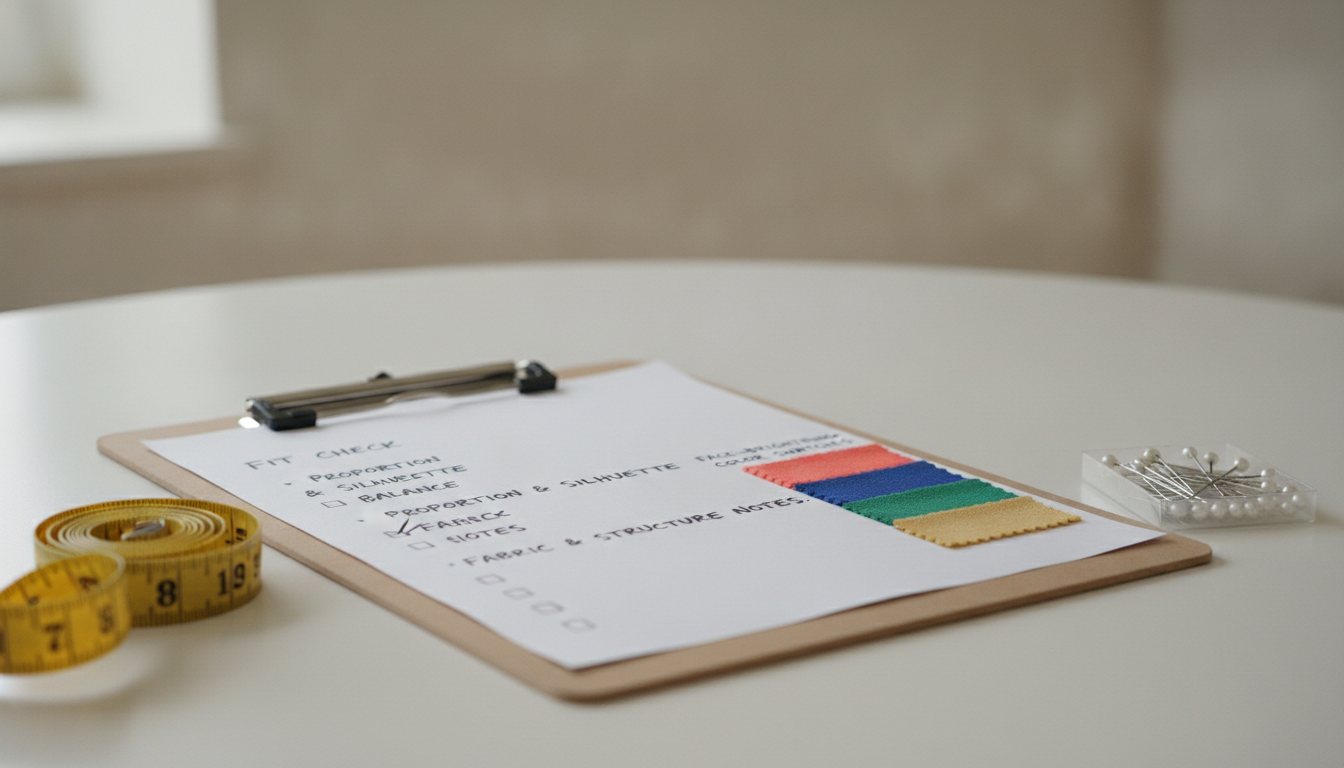
A simple order that keeps sessions focused is: fit first, then silhouette balance, then fabric and structure, then face-brightening color. If you do one thing, do fit, because it decides whether the garment can be worn for more than 20 minutes, not just whether it looks good in a mirror.

A practical checklist you can use in a fitting

Next, use a repeatable check instead of styling by guesswork. This takes 5 to 10 minutes per outfit and gives you clear notes for what to keep, tailor, replace, or restyle.

  • Fit (comfort and hang): breathing room at waist, no pulling across bust or hips, arm mobility, hem not riding up

  • Silhouette balance (proportion): define or suggest a waist, balance volume (wide-leg with a cleaner top, slim bottom with a longer layer), check where the hem hits (hip, mid-thigh, knee)

  • Fabric and structure (support): choose fabrics that skim instead of cling, add structure where needed (a blazer, a firm denim, a more substantial knit)

  • Face-brightening color (near the face): test 2 to 3 scarf or top colors in daylight and keep the ones that reduce shadows under the eyes and even out redness

Here’s the catch: this works best when the client is open to small changes, and it fails when you jump straight to color while the fit is still wrong. The fix is to tailor or swap the base layer first, then revisit color with a clean neckline and correct size.

Deliverables clients actually use

In practice, leave the client with three things they can repeat without you. This is what turns a good session into a wardrobe that gets worn on weekdays.

  • Outfit formulas (3 to 5), written in plain language, for example:

    • Straight or wide-leg trouser + fitted knit tee + longer open layer + low-contrast shoe

    • Dark jean + tucked blouse + structured jacket + belt that matches shoe

    • Midi skirt + lightweight knit + cropped jacket that ends at waist

  • Alteration strategy (1 page): what to hem, what to take in, what to release, and what is not worth altering

  • Hero pieces list (5 to 8 items) to anchor looks, such as a well-cut blazer, a dark jean that fits at the waist, a mid-heel or polished flat, a top in a face-brightening color, and one dress you can layer

If you’re short on time, skip building a large shopping list and focus on one hero bottom + one hero jacket + two tops in face-brightening colors. That combo can cover most real-life needs, from school runs to client meetings to dinners, with small accessory changes.

From wardrobe editing to lifestyle styling that builds confidence

So once you know what fits and why, the next confidence jump comes from editing with empathy, not judgment. The goal is not a “perfect closet”, it’s a wardrobe that supports who your client is right now, in her current life, body, and role.

Start by keeping anything that clearly supports present identity, even if it is not trendy or new. Release pieces that are tied to an old chapter, feel physically uncomfortable after 20 minutes, or require constant adjusting to look “okay” in the mirror.

Use a simple edit that is easy to do in one 60 to 90 minute session:

  • Keep: fits today, feels good, gets worn at least monthly

  • Tailor: fits everywhere except one area (for example, waist or sleeve)

  • Style differently: good piece, wrong pairing (for example, skirt needs a less clingy top)

  • Replace: worn out basics (like a stretched tee or tired trousers)

  • Let go: items that trigger comparison, guilt, or discomfort

Common mistake: pushing a client to purge fast to feel “productive”. Fix it by choosing only 10 items to let go first, then reassess after you build 3 to 5 outfits she actually wears.

Next, plan for real life before you shop or add anything new. If her calendar is 70% work and school runs but the closet is 70% occasion wear, confidence drops every morning because the wardrobe fights the day.

Ask for a quick lifestyle split, then build outfits to match:

  • Work: 3 repeatable outfits that work for long days (include a comfortable shoe plan)

  • Casual: 3 outfits that still look “put together” in photos and errands

  • Evening: 1 outfit with two shoe options so it can shift from dinner to an event

  • Travel: 1 capsule built around one jacket, two bottoms, three tops

If you do one thing, do this: add accessories and comfort early, not as an afterthought. For example, choose the bag, shoe, and one piece of jewelry first, then match clothing to that level of presence so the client does not feel she has to “tough it out” to look confident.

Style that keeps getting more personal

So if you and your client feel behind, remember this: style has no deadline; it simply becomes more personal.

After 40, the goal is rarely to “dress younger.” It is to dress more honestly, using the body and life your client has right now, with fits they can move in, colors that are kind to their skin, and outfits that match their calendar.

Next, try this reflective question the next time a client says they feel stuck: what would change for your clients if you styled the life they have now, not the age they are?

Often the answer is concrete and immediate:

  • Fewer “maybe” purchases and more repeatable outfits

  • Less time spent fighting the mirror and more time spent living the day

  • A wardrobe that supports their work, weekends, and events with less guesswork

Explore Milan Fashion Campus styling courses

FAQ

What is styling women over 40?

Styling women over 40 means dressing the client’s current body and life, not a past size or a trend checklist. It focuses on fit, proportion, comfort, and a clear color range so outfits feel consistent for work, weekends, and events.

Should women over 40 avoid trends?

No. Trends work best when they match your client’s proportions and daily routine. They fail when they fight fit or feel costume-like. A simple rule is one trend at a time, in a familiar color, with classic basics.

How can clothes support body changes after 40?

Start with fit at the shoulders, bust, waist, and hips, then adjust the rest. Use stretch where it helps, add structure where it supports, and choose rises, necklines, and hem lengths that reduce pulling, gaping, and constant readjusting.

Is personal styling useful for women over 40?

Yes, especially during size shifts, role changes, or closet resets. A stylist shortens trial and error by picking a few reliable silhouettes, setting a color plan, and building outfits that repeat. The result is faster getting dressed and fewer unused purchases.

What should a stylist avoid when styling women over 40?

Avoid age labels and “rules” like hiding everything or dressing younger. Also avoid guessing sizes and buying without trying for fit. A common mistake is chasing trends before fixing basics; instead, prioritize fit and a small set of repeatable outfits.